


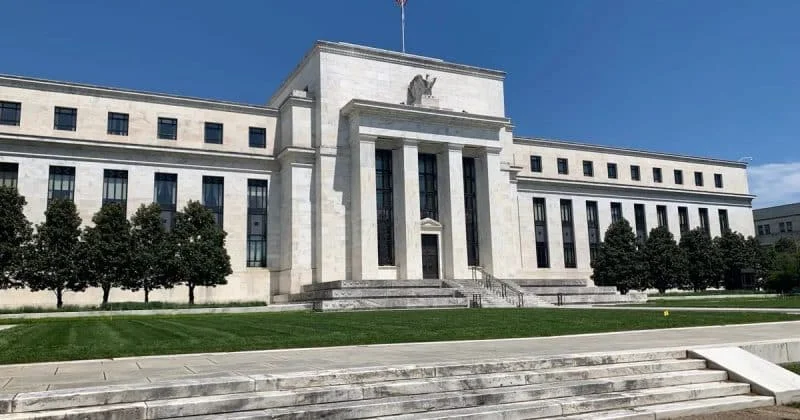
The Custodia Bank master account denial has become one of the most closely watched disputes at the intersection of cryptocurrency, traditional banking and U.S. financial regulation. What began as a banking access dispute has developed into a broader legal and policy debate over the authority of the Federal Reserve, the rights of state-chartered banks and the future of regulated digital-asset businesses in the United States.
The latest development came in August 2026, when the Blockchain Association filed an amicus brief supporting Custodia Bank’s petition asking the U.S. Supreme Court to review its long-running fight with the Federal Reserve. The industry group is asking the justices to examine whether regional Federal Reserve Banks have broad discretion to reject master-account applications from otherwise eligible state-chartered institutions.
The dispute matters because a Federal Reserve master account provides direct access to the central bank’s payment infrastructure. For a bank serving digital-asset customers, that access can affect how efficiently it connects to payment and settlement systems and how competitive its services can be.
Custodia, a Wyoming-chartered special-purpose depository institution focused on digital assets, originally applied for a master account with the Federal Reserve Bank of Kansas City in 2020. The application was ultimately denied in January 2023, with the Kansas City Fed pointing to concerns surrounding Custodia’s crypto-focused business model and associated risks.
The legal battle has since moved through the federal courts. In 2025, the U.S. Court of Appeals for the Tenth Circuit ruled that Federal Reserve Banks have discretion to reject master-account requests from eligible institutions. In March 2026, the full appeals court declined to rehear the case.
Now, Custodia is asking the Supreme Court to take up the matter, while the Blockchain Association argues that the case deserves review because of its implications for crypto banking, financial innovation, regulatory clarity and equal access to the U.S. payments system.
What Is the Custodia Bank Master Account Dispute?
To understand the importance of the Custodia Bank master account denial, it is necessary to understand what a master account actually does.
A master account is an account held by a depository institution at a Federal Reserve Bank. It allows an eligible institution to connect directly with the Federal Reserve’s payment and settlement infrastructure instead of relying exclusively on intermediary institutions. The Blockchain Association has described this access as important to banks that want to provide modern financial services efficiently.
For traditional banks, access to Federal Reserve infrastructure is a long-established component of the banking system. For digital-asset banks, however, obtaining such access has become a much more complicated regulatory question.
Custodia was established under Wyoming’s special-purpose depository institution framework. The bank positioned itself around digital assets and financial services for customers operating in the cryptocurrency economy. It sought Federal Reserve access as part of its broader business model.
The Federal Reserve ultimately rejected Custodia’s application. The central bank said the bank’s proposed activities were novel and carried significant safety-and-soundness concerns. The Federal Reserve separately denied Custodia’s application for membership in the Federal Reserve System in January 2023. (Federal Reserve)
The disagreement therefore goes beyond whether one particular bank should receive an account. At its core, the case asks who should determine whether an eligible institution can access critical central-bank infrastructure and what standards should govern that decision.
Why the Blockchain Association Is Supporting Custodia
The Blockchain Association’s intervention reflects the crypto industry’s broader concern about banking access for digital-asset companies.
The organization has urged the Supreme Court to consider whether regional Federal Reserve Banks possess the level of discretion that the lower courts have recognized. Its position is that lawful digital-asset businesses should be able to compete on equal footing with other financial businesses when they meet applicable legal requirements.
This argument is particularly important for the cryptocurrency industry because access to banking infrastructure has historically been one of its most difficult challenges.
Digital-asset businesses can comply with licensing, capital, anti-money-laundering and other regulatory requirements while still facing uncertainty about whether banks will provide essential services. A dispute such as the Custodia case therefore has implications far beyond one institution.
The Blockchain Association’s support suggests that industry participants view master account access as part of a much larger question about regulatory neutrality.
If regulators can deny access based substantially on concerns about a bank’s crypto-focused business model, industry advocates argue that the policy could make it more difficult for regulated digital-asset companies to build businesses in the United States.
The Federal Reserve’s Concerns About Custodia
The Federal Reserve’s position has been based largely on financial stability, risk management and the unusual nature of Custodia’s proposed business model.
When the Federal Reserve denied Custodia’s membership application, it characterized the bank’s proposed crypto activities as novel and untested. The Board also pointed to concerns involving the speculative and volatile nature of crypto assets, risk management and anti-money-laundering controls.
The Federal Reserve’s concerns were not simply about cryptocurrency prices. Regulators were also considering how an uninsured institution with a concentrated digital-asset business could interact with the broader financial system.
The central bank has a responsibility to protect the stability and integrity of payment infrastructure. From that perspective, regulators can argue that direct access to Federal Reserve systems should be evaluated carefully when an institution has a novel business model.
This creates the central tension in the case. Custodia and its supporters emphasize statutory eligibility and equal treatment, while the Federal Reserve emphasizes supervisory discretion and systemic risk.
Why a Master Account Matters for Crypto Banks

A master account can be strategically important because it gives a financial institution direct access to Federal Reserve services.
For a bank operating in the digital-asset sector, direct access can reduce dependence on intermediary banking relationships and improve the efficiency of payments and settlements. It can also provide greater integration with the established U.S. banking infrastructure.
That is why the Custodia Bank master account denial has attracted attention from cryptocurrency companies, banking lawyers and policymakers.
The issue is especially significant because crypto companies have historically depended on a relatively small group of banks willing to provide access to the traditional financial system. Regulatory uncertainty or restrictions affecting those relationships can have consequences throughout the digital-asset market.
The broader debate is therefore about whether digital asset banks should have a predictable route into the same payment infrastructure used by traditional financial institutions.
The Tenth Circuit’s Role in the Dispute
Custodia’s legal strategy suffered a major setback in October 2025 when the Tenth Circuit Court of Appeals ruled against the bank.
The appellate court concluded that the relevant statutes give Federal Reserve Banks discretion to reject master-account requests from eligible institutions. The court specifically rejected Custodia’s argument that eligibility required the Federal Reserve to grant access regardless of perceived risk.
The ruling was significant because it established an important judicial interpretation of Federal Reserve authority.
According to the court, allowing state chartering alone to determine access to Federal Reserve infrastructure could potentially limit the central bank’s ability to protect the financial system. The decision therefore gave considerable weight to the Fed’s ability to assess risk when considering master-account applications.
Custodia subsequently sought rehearing by the full Tenth Circuit. That effort failed in March 2026, when the court declined en banc review by a 7–3 vote.
With that avenue closed, the Supreme Court became Custodia’s next major opportunity for judicial review.
Why the Supreme Court Petition Matters
The Supreme Court does not automatically hear cases simply because a party requests review. The justices must first agree to take the case.
Custodia’s petition nevertheless has attracted attention because the legal question could influence how Federal Reserve Banks handle master-account applications across the country.
The Blockchain Association’s brief argues that the Supreme Court should examine the scope of Federal Reserve discretion. Its involvement adds an important industry perspective to a case that could shape crypto banking regulation for years.
The question is not necessarily whether every cryptocurrency-focused bank should automatically receive a master account. Rather, the debate concerns the legal standard regulators should apply and the extent to which eligible institutions can challenge a denial.
That distinction is crucial.
A regulatory framework can impose strict requirements without eliminating regulatory discretion. At the same time, excessive discretion without transparent standards can create uncertainty for financial institutions planning long-term investments.
The Supreme Court’s potential involvement could therefore help clarify where the balance should lie.
The Changing Landscape of Federal Reserve Master Accounts
The Custodia dispute is unfolding while the Federal Reserve’s approach to master accounts continues to evolve.
Federal Reserve master-account applicants can face different levels of scrutiny depending on their regulatory status. Congressional Research Service materials describe a framework in which applicants with federal insurance or stronger federal supervision receive less scrutiny, while institutions without those characteristics can receive more intensive review.
Custodia falls into a category that has received particularly close attention because it is a state-chartered, uninsured institution with a specialized digital-asset business model.
This is important because banking regulation for crypto cannot be separated from the broader question of how the Federal Reserve evaluates nontraditional financial institutions.
The existence of different supervisory tiers suggests that master-account access is not treated as a simple administrative process for every applicant. Instead, regulators evaluate the applicant’s structure, supervision, business activities and associated risks.
That approach may be defensible from a financial-stability perspective, but it also raises questions about consistency and transparency.
Kraken’s Limited Master Account Adds a New Dimension
Another important development has made the Custodia dispute even more relevant.
In March 2026, Kraken Financial received a limited-purpose master account, providing a new example of how a crypto-related institution can obtain access to parts of the Federal Reserve payment infrastructure. Industry reporting has described the account as restricted compared with a traditional full-service arrangement.
The development creates an interesting contrast.
Custodia has spent years challenging the denial of its application, while another crypto-native institution has obtained a limited form of Federal Reserve access. That does not automatically determine the legal merits of Custodia’s case because the institutions, applications and regulatory circumstances can differ.
However, the development strengthens the industry’s argument that crypto banking access is changing and that clear standards could become increasingly important.
As more digital-asset companies seek regulated banking relationships, policymakers may face growing pressure to define precisely what access should look like and which safeguards should be required.
What the Case Means for Digital Asset Regulation
The Custodia Bank master account denial is part of a much larger evolution in U.S. digital-asset regulation.
For years, cryptocurrency businesses operated in an environment where regulators were still determining how existing banking and securities frameworks should apply to emerging technologies.
That uncertainty has created both opportunities and challenges.
A clearer framework could encourage legitimate companies to invest in compliance, develop stronger risk-management systems and establish long-term relationships with regulated financial institutions. At the same time, regulators will continue to demand protections against money laundering, fraud, liquidity problems and other risks.
The Custodia dispute highlights the importance of distinguishing between regulatory oversight and regulatory exclusion.
Crypto advocates generally do not argue that digital-asset banks should operate without supervision. Instead, they want rules that allow compliant institutions to compete while maintaining appropriate safeguards.
The Blockchain Association’s Supreme Court filing reflects that broader position.
Why Regulatory Clarity Matters to the Crypto Industry
Regulatory clarity can influence everything from investment decisions to banking relationships.
When financial institutions cannot predict whether a particular business model will qualify for access to essential infrastructure, they may become more cautious about serving digital-asset customers.
That uncertainty can encourage businesses to move operations outside the United States or rely on less efficient financial arrangements.
For investors, clearer rules can also improve confidence in the development of the U.S. crypto market.
If banks know what standards they must meet to obtain Federal Reserve services, they can design their businesses accordingly. If regulators have transparent criteria for evaluating risk, applicants can understand what deficiencies need to be addressed.
The Custodia case therefore represents a fundamental policy question: how can regulators protect the financial system while allowing legitimate innovation to develop?
There is no simple answer, but judicial clarification could help establish boundaries for both sides.
The Broader Debate Over Crypto and Traditional Banking
The relationship between cryptocurrency and traditional banking has changed dramatically over the past decade.
Early crypto businesses often operated outside conventional financial infrastructure. As the industry matured, however, the demand for regulated banking, payments, custody and settlement services increased.
This has created a growing need for institutions capable of connecting digital assets with traditional finance.
Custodia’s business model was designed around precisely that connection. The bank sought to provide services to digital-asset customers while operating under a state banking charter.
The dispute demonstrates the difficulty of integrating an innovative financial sector into a highly regulated banking system.
Traditional banks are generally subject to extensive supervisory requirements, while specialized digital-asset institutions may have different structures and risk profiles. Regulators therefore face the challenge of applying established principles to new financial technologies without creating unnecessary barriers to competition.
What Could Happen Next?
The immediate focus is on whether the Supreme Court will agree to review Custodia’s petition.
If the Court accepts the case, the resulting decision could provide important guidance about the legal authority of Federal Reserve Banks and the rights of eligible state-chartered institutions seeking master accounts.
If the Court declines review, the Tenth Circuit’s decision will remain an important precedent in the jurisdiction it covers, while the broader policy debate may continue through regulatory and legislative channels.
Either outcome could influence future applications.
A Supreme Court ruling in Custodia’s favor would not necessarily mean automatic master-account access for every crypto-focused bank. Instead, it could establish limits on how the Federal Reserve exercises discretion.
Conversely, a decision supporting broad Federal Reserve discretion could strengthen regulators’ ability to reject applicants based on safety-and-soundness considerations.
For the digital-asset industry, both possibilities make the case worth watching closely.
What the Custodia Dispute Means for Investors

Most individual cryptocurrency investors will never apply for a Federal Reserve master account. Nevertheless, the case can still affect them indirectly.
Banks provide much of the infrastructure that allows money to move between traditional financial markets and digital assets. If banking access becomes easier for compliant crypto companies, it could support the development of more efficient financial products and services.
On the other hand, regulators are likely to continue demanding strong safeguards before granting specialized institutions greater access to central-bank infrastructure.
Investors should therefore view the dispute as part of the broader development of regulated cryptocurrency markets rather than simply as a legal battle between one bank and the Federal Reserve.
The outcome could influence how digital-asset companies structure their businesses and how traditional financial institutions approach the sector.
Conclusion: A Defining Test for Crypto Banking Access
The Custodia Bank master account denial has evolved into a major test of the relationship between cryptocurrency and the U.S. banking system.
The Blockchain Association’s support for Custodia’s Supreme Court petition shows that the industry views the case as more than an individual banking dispute. At stake are questions about Federal Reserve authority, master account eligibility, digital asset banking, regulatory transparency and the ability of lawful crypto businesses to compete within the U.S. financial system.
The Federal Reserve maintains that Custodia’s novel and concentrated crypto business model created significant safety-and-soundness concerns. The courts have so far agreed that Federal Reserve Banks have discretion to reject master-account applications from eligible institutions.
Custodia and its supporters, meanwhile, argue that the legal framework should provide eligible institutions with a clearer and more predictable path to Federal Reserve payment services.
As the Supreme Court considers whether to take up the dispute, the case could become an important milestone for the future of crypto banking regulation in the United States. Whatever happens next, the debate demonstrates that access to financial infrastructure is becoming just as important to the digital-asset industry as the technology itself.
Frequently Asked Questions
Q. What is the Custodia Bank master account denial?
The Custodia Bank master account denial refers to the Federal Reserve Bank of Kansas City’s decision to reject Custodia Bank’s application for direct access to the Federal Reserve’s payment infrastructure. The denial occurred in January 2023 after regulators raised concerns about Custodia’s crypto-focused business model and associated risks. (Justia Law)
Q. Why does Custodia want a Federal Reserve master account?
Custodia sought a master account to gain direct access to Federal Reserve payment and settlement services. Such access can allow a bank to interact more directly with central-bank infrastructure rather than depending entirely on intermediary banking relationships.
Q. Why is the Blockchain Association supporting Custodia?
The Blockchain Association is supporting Custodia’s Supreme Court petition because it believes the case raises important questions about whether Federal Reserve Banks have broad discretion to reject master-account applications from otherwise eligible state-chartered institutions. The organization says the outcome could affect equal competition for lawful digital-asset businesses. (The Block)
Q. Did Custodia win its case against the Federal Reserve?
No. The Tenth Circuit ruled in 2025 that Federal Reserve Banks have discretion to reject master-account requests from eligible entities. The full Tenth Circuit later declined to rehear the case in March 2026. Custodia has subsequently sought Supreme Court review. (Justia Law)
Q. Why is the Custodia case important for cryptocurrency?
The case could help define how digital-asset banks interact with the U.S. banking system. Its outcome may influence the balance between regulatory discretion, financial stability, banking access and competition for crypto-focused financial institutions. It could therefore become an important reference point for the future of regulated cryptocurrency banking.
