


The cryptocurrency investment landscape has undergone a dramatic transformation over the past several years, and Europe stands at the forefront of this evolution. CoinShares, a leading digital asset manager, has announced a groundbreaking move that signals renewed confidence in the digital currency market and regulatory clarity across European markets. The company’s entry into Europe’s UCITS market with its innovative Bitcoin mining ETF launch represents a pivotal moment for both institutional and retail investors seeking regulated exposure to cryptocurrency assets.
UCITS (Undertakings for Collective Investment in Transferable Securities) is the European framework that governs investment funds, ensuring strict regulatory oversight and investor protection standards. For years, traditional financial institutions have hesitated to embrace cryptocurrency-based products due to regulatory uncertainty and classification challenges. However, CoinShares’ decision to introduce a Bitcoin mining ETF under this framework demonstrates that the regulatory environment has matured significantly. This development opens unprecedented opportunities for European investors who have previously struggled to access legitimate, regulated exposure to Bitcoin mining operations and related digital assets.
The significance of this launch extends far beyond a single product offering. It represents institutional recognition that cryptocurrency mining, particularly Bitcoin mining, has become a legitimate and profitable sector worthy of sophisticated investment vehicles. As the global energy landscape shifts and mining operations become increasingly efficient and sustainable, European regulators and investors alike are recognizing the value proposition of Bitcoin mining investments. CoinShares’ UCITS-compliant ETF provides European investors with a transparent, regulated pathway to participate in this dynamic sector without the complexity and risk associated with direct ownership or unregulated crypto platforms.
This article explores the implications of CoinShares’ market entry, the mechanics of Bitcoin mining ETFs, the broader context of cryptocurrency regulation in Europe, and what this development means for the future of digital asset investing across the continent.
CoinShares’ Strategic Market Entry
CoinShares has established itself as one of the world’s largest digital asset investment managers, managing billions in assets across multiple product categories. The company’s decision to launch a Bitcoin mining ETF in Europe reflects a strategic assessment that the market conditions, regulatory framework, and investor appetite have aligned favorably. This move is not impulsive; rather, it represents years of regulatory engagement, product development, and market research.
The Regulatory Pathway to UCITS Approval
Obtaining UCITS approval for a cryptocurrency-related product is no trivial undertaking. The regulatory requirements are stringent, and European authorities have been deliberately cautious about approving digital asset products. CoinShares’ ability to navigate this complex landscape successfully demonstrates the company’s expertise in regulatory compliance and its credibility within the institutional investment community. The European Securities and Markets Authority (ESMA) and national financial regulators have increasingly recognized that properly structured cryptocurrency investment products can meet the safety and transparency standards required under UCITS directives.
The pathway to approval involved demonstrating several key elements: robust risk management frameworks, transparent pricing mechanisms, adequate custody solutions for underlying mining assets, and comprehensive disclosure of operational risks associated with blockchain technology and mining operations. By satisfying these requirements, CoinShares has not only launched a product but has also set a precedent for future crypto ETF approvals in Europe, potentially catalyzing a wave of similar launches from competing asset managers seeking to capitalize on regulatory clarity.
Why Bitcoin Mining Matters in the ETF Space
Bitcoin mining represents a unique investment opportunity distinct from direct Bitcoin ownership. While Bitcoin itself is a volatile asset class primarily driven by speculative demand and macroeconomic factors, mining operations generate revenue through a more fundamental economic mechanism: providing computational security to the blockchain network in exchange for newly minted Bitcoin and transaction fees. This distinction is crucial for institutional investors who may be uncomfortable with pure speculation but are comfortable with exposing their portfolios to mining industry fundamentals.
Mining companies operate similarly to traditional energy-intensive industrial businesses, with operational efficiency, power costs, hardware investment, and market dynamics all influencing profitability. A Bitcoin mining ETF allows investors to gain exposure to mining stocks, publicly traded mining companies, and mining-related derivatives without requiring deep technical knowledge of the sector or the ability to evaluate individual mining operations. This approach democratizes access to what was previously an esoteric, specialized investment category.
The European Cryptocurrency Investment Landscape
Europe has emerged as a particularly attractive market for cryptocurrency and digital asset innovation, despite its traditionally conservative regulatory approach. The European Union’s Markets in Crypto-assets Regulation (MiCA), which came into force in 2023, established the first comprehensive regulatory framework for digital asset trading at the continental level. This regulatory clarity has been instrumental in attracting legitimate cryptocurrency investment products and encouraging existing players to expand their European operations.
Regulatory Framework Advantages
The introduction of MiCA and the existing UCITS framework creates a unique advantage for European investors compared to their counterparts in other jurisdictions. These regulations establish clear definitions for crypto assets, outline requirements for cryptocurrency exchanges, mandate custodian standards, and require transparent reporting and risk disclosure. For CoinShares, this regulatory clarity transformed what was previously a compliance minefield into a navigable pathway for product development.
European regulators have demonstrated a pragmatic approach: rather than banning digital assets or relegating them to an unregulated space, they have chosen to integrate them into the established regulatory infrastructure. This approach provides investors with protections comparable to traditional securities investments while allowing genuine innovation in the cryptocurrency space. CoinShares’ UCITS-compliant Bitcoin mining ETF exists within this framework, meaning investors benefit from the same investor protections, transparency standards, and dispute resolution mechanisms that apply to traditional European investment funds.
Institutional Demand and Market Timing
The timing of CoinShares’ launch aligns with observable shifts in institutional investor sentiment toward digital assets. Large institutional investors, pension funds, and wealth managers have increasingly recognized the importance of including cryptocurrency exposure within diversified portfolios. However, many institutional mandates explicitly require that investments be held through regulated vehicles that comply with strict compliance and reporting standards. Until recently, few Bitcoin or cryptocurrency-focused ETFs met these demanding criteria in Europe.
CoinShares’ new offering directly addresses this institutional demand. By providing UCITS-approved access to Bitcoin mining investments, the company enables pension funds, insurance companies, and other regulated financial institutions to increase their crypto exposure while remaining compliant with their own regulatory requirements. This institutional demand represents a market opportunity that extends far beyond retail investors and positions CoinShares advantageously within the competitive landscape of digital asset investment managers.
How Bitcoin Mining ETFs Function
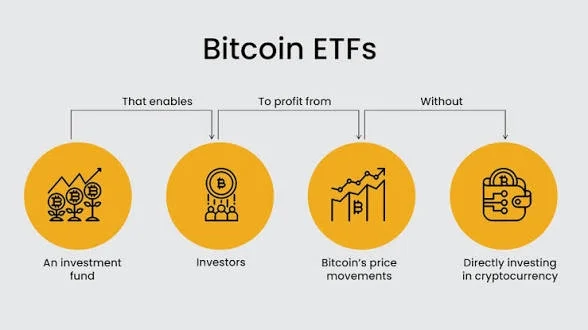
Understanding the mechanics of a Bitcoin mining ETF requires appreciating how these products bridge the gap between direct asset ownership and traditional investment vehicles. Unlike spot Bitcoin ETFs, which hold actual Bitcoin, or Bitcoin futures ETFs, which use derivative contracts, a Bitcoin mining ETF typically holds a diversified portfolio of mining company stocks or mining-related securities.
Portfolio Construction and Asset Selection
A well-constructed Bitcoin mining ETF carefully selects holdings from publicly listed companies engaged in Bitcoin mining operations worldwide. These holdings might include large-scale mining companies with significant operational capacity, publicly traded miners with diverse revenue streams, and companies providing infrastructure or services to the mining industry. The index methodology underlying such an ETF considers factors such as mining hash rate, operational efficiency, geographic diversification of mining facilities, and financial stability of underlying companies.
CoinShares’ expertise in constructing cryptocurrency investment products means the company applies sophisticated index methodology to ensure the mining ETF provides meaningful exposure to mining industry dynamics while maintaining appropriate diversification. This diversification is particularly important given that individual mining companies can experience volatile performance based on equipment costs, electricity prices, Bitcoin price movements, and regulatory developments in different jurisdictions.
Advantages Over Direct Mining Investments
Direct Bitcoin mining investments require substantial technical knowledge, operational oversight, and capital commitment. Individual investors typically cannot efficiently operate mining equipment or manage the complexities of mining farm operations. Even investing in individual mining company stocks requires substantial research and exposes investors to company-specific risks unrelated to mining industry fundamentals.
A UCITS-regulated Bitcoin mining ETF solves these problems through diversification, professional management, and regulatory oversight. Investors gain exposure to mining industry returns through a transparent, liquid, regulated vehicle. Unlike cryptocurrency exchanges or unregulated mining platforms, UCITS-compliant ETFs offer clarity regarding fees, holdings, performance, and risk factors. This simplicity and transparency make Bitcoin mining investments accessible to investors who might otherwise remain on the sidelines.
The Implications for European Investors
CoinShares’ Bitcoin mining ETF launch carries significant implications for European investors across multiple dimensions, from portfolio construction to regulatory protection to market accessibility.
Institutional Portfolio Integration
For institutional investors, the availability of a UCITS-compliant Bitcoin mining ETF fundamentally changes the calculus around cryptocurrency exposure. Many institutional investment mandates explicitly restrict holdings to UCITS-approved products or equivalently regulated investments. Prior to this launch, meeting institutional requirements while gaining Bitcoin exposure required creative compliance solutions or accepting regulatory gray areas. Now, institutional investors can straightforwardly allocate to Bitcoin mining through a product that meets the highest regulatory standards.
This institutional accessibility is likely to drive substantial asset inflows into the mining ETF, particularly from pension funds seeking to diversify beyond traditional equity and bond holdings. As Baby Boomer generation retirements continue accelerating across Europe, institutional pension fund managers are increasingly seeking alternative investments that provide uncorrelated returns. Bitcoin mining exhibits characteristics that appeal to institutional allocators: exposure to emerging technology sectors, potential inflation hedging properties, and returns driven by fundamental industrial economics rather than pure speculation.
Retail Accessibility and Market Democratization
Beyond institutional investors, CoinShares’ UCITS-compliant ETF democratizes Bitcoin mining exposure for retail investors. Previously, individuals interested in mining industry investments faced limited options outside of owning individual mining company stocks or engaging with unregulated cryptocurrency platforms. The new ETF provides retail investors with a regulated, transparent vehicle offering diversified mining exposure through a purchase as simple as buying any other European stock exchange-traded fund.
This accessibility is particularly important in countries with strong retail investment cultures but conservative regulatory frameworks. Investors in Germany, France, Spain, and other major European markets can now gain Bitcoin mining exposure without concern about regulatory compliance or custody risk. The familiar ETF structure reduces friction and education requirements, allowing investors comfortable with traditional investments to seamlessly extend their portfolios into digital asset investing.
Liquidity and Market Transparency
UCITS-listed ETFs benefit from transparent pricing and high liquidity on European stock exchanges. CoinShares’ Bitcoin mining ETF will likely trade on major European exchanges, providing continuous price discovery and tight bid-ask spreads. This liquidity contrasts sharply with direct mining company investments, which may trade on regional or less liquid markets, or with mining-focused investment vehicles operating in jurisdictions with less developed market infrastructure.
The transparency inherent in exchange-traded funds also benefits investors by providing continuous valuation information, detailed holdings disclosure, and standardized performance reporting. This transparency facilitates informed decision-making and enables investors to understand exactly what they own and how their investments perform relative to mining industry benchmarks.
Market Context: Bitcoin Mining Industry Growth

The global Bitcoin mining industry has evolved dramatically, transitioning from a niche hobby activity to a sophisticated industrial operation. Understanding this evolution provides context for why CoinShares’ UCITS Bitcoin mining ETF represents a timely innovation.
Industry Professionalization and Efficiency Gains
Modern Bitcoin mining operations resemble industrial manufacturing facilities more than garage-based cryptocurrency projects. Mining farms operate at massive scales with thousands of specialized computing machines, sophisticated power management systems, and professional operations teams. Companies have invested billions in facility development, and this professionalization has attracted serious institutional attention.
The professionalization of mining operations has yielded substantial efficiency improvements. Modern ASIC miners (Application-Specific Integrated Circuit devices) are orders of magnitude more efficient than earlier equipment. Mining companies have implemented sophisticated power management strategies, negotiated favorable electricity contracts in regions with abundant cheap power, and optimized facility designs to maximize hash rate per unit of power consumed. These efficiency gains directly improve mining profitability and make mining company stocks more attractive to value-oriented investors.
Environmental Considerations and Energy Transition
The relationship between Bitcoin mining and energy consumption has been contentious, but recent developments have improved the sector’s environmental profile. A significant and growing percentage of mining operations now utilize renewable energy sources, from hydroelectric power to geothermal and wind energy. This transition reflects both regulatory pressure and genuine economic incentives: renewable power provides stable, increasingly cost-competitive electricity that improves mining margins.
This shift toward sustainable mining operations addresses one of the primary criticisms of Bitcoin and cryptocurrencies from environmental perspectives. For European investors, many of whom prioritize environmental, social, and governance (ESG) considerations, the increasing adoption of renewable energy by mining companies enhances the appeal of mining investments. CoinShares’ Bitcoin mining ETF likely incorporates considerations of energy sourcing and environmental impact, making it attractive to ESG-conscious investors.
Competitive Landscape and Future Prospects
CoinShares’ UCITS Bitcoin mining ETF launch occurs within a competitive landscape that includes other asset managers seeking to capitalize on the growing demand for cryptocurrency investment products in Europe.
Competition Among Digital Asset Managers
Companies including Grayscale, Invesco, and others have launched or sought to launch cryptocurrency-related ETFs in various markets. However, CoinShares’ specific focus on UCITS-compliant products and the company’s established relationships with European regulators provide competitive advantages. The first-mover status in launching a UCITS-compliant Bitcoin mining ETF gives CoinShares meaningful differentiation in the European market.
As additional competitors inevitably launch competing mining ETFs, investors will benefit from genuine product choice, competitive fee pressures, and innovation in index construction and holdings selection. CoinShares’ early market entry positions the company to establish brand recognition, accumulate assets under management, and benefit from economies of scale.
Regulatory Precedent and Future Product Development
The successful launch of CoinShares’ Bitcoin mining ETF establishes a regulatory precedent that should facilitate approval of related products. Other asset managers seeking to launch cryptocurrency-focused ETFs in Europe can now reference the regulatory pathway established through CoinShares’ approval, potentially reducing approval timelines and regulatory uncertainty for future product launches.
This precedent effect likely catalyzes broader innovation in European cryptocurrency investment products, including potential Ethereum mining ETFs, diversified digital asset ETFs, and other specialized crypto-focused vehicles. The regulatory clarity and investor acceptance established through successful Bitcoin mining ETF launches benefits the entire digital asset investment industry.
Conclusion
CoinShares’ entry into Europe’s UCITS market with its innovative Bitcoin mining ETF launch represents a watershed moment for cryptocurrency investing on the continent. By successfully navigating the complex regulatory landscape and delivering a product that meets the exacting standards of UCITS approval, CoinShares has eliminated a crucial barrier to institutional and retail investor participation in the Bitcoin mining sector. The availability of a regulated, transparent, professionally managed cryptocurrency investment vehicle enables European investors to access exposure to mining industry returns through a familiar, trusted format.
The timing proves optimal, coinciding with professionalization of the global mining industry, demonstrated efficiency improvements, and increasingly favorable regulatory conditions. European investors now possess unprecedented access to digital asset investing through regulatory frameworks that provide protection and transparency. Institutions can satisfy compliance requirements while gaining cryptocurrency exposure, and retail investors can participate in this emerging sector through straightforward, liquid exchange-traded funds.
As the cryptocurrency investment landscape continues evolving and regulatory frameworks mature, CoinShares’ Bitcoin mining ETF will likely serve as a template for future innovation. The success of this launch validates the commercial viability of UCITS-compliant digital asset products and establishes a foundation for continued growth in the European cryptocurrency market. For investors seeking sophisticated exposure to mining industry fundamentals, enhanced portfolio diversification through digital assets, or entry into the evolving cryptocurrency ecosystem, CoinShares’ new offering provides an efficient, regulated solution that aligns with the highest European investment standards.
Frequently Asked Questions (FAQs)
Q1. What exactly is a Bitcoin mining ETF and how does it differ from owning Bitcoin directly?
A Bitcoin mining ETF holds shares of companies engaged in Bitcoin mining operations, whereas direct Bitcoin ownership means holding the actual cryptocurrency. The mining ETF provides exposure to the profitability of mining operations and the companies running them, while direct Bitcoin ownership gives exposure to Bitcoin price movements.
Q2. Is a UCITS-regulated Bitcoin mining ETF safer than unregulated crypto platforms?
UCITS regulation provides substantially greater investor protection than unregulated cryptocurrency platforms. UCITS products must meet strict requirements regarding custody, transparency, risk management, and fund governance.
Q3. Who should consider investing in a Bitcoin mining ETF?
Bitcoin mining ETFs suit several investor categories, including institutional investors (pension funds, insurance companies, endowments) seeking regulated cryptocurrency exposure, retail investors desiring digital asset diversification through familiar ETF structures, and individuals interested in technology sector exposure who prefer industrial economics over pure speculation.
Q4. How does the fee structure of CoinShares’ Bitcoin mining ETF compare to other investment options? (Continued)
While specific fee details depend on CoinShares’ published fee schedule, UCITS-regulated ETFs typically carry annual expense ratios (management fees) ranging from 0.2% to 0.8%, substantially lower than traditional actively managed funds (typically 1-2%) and comparable to other UCITS-listed ETFs.
Q5. What potential risks should investors consider before investing in a Bitcoin mining ETF?
Bitcoin mining ETF investments carry several categories of risks that investors should understand before committing capital. Market risk is substantial, as mining company stocks exhibit volatility comparable to technology sector investments, and profitability depends on Bitcoin price movements, electricity costs, and mining difficulty adjustments.
